
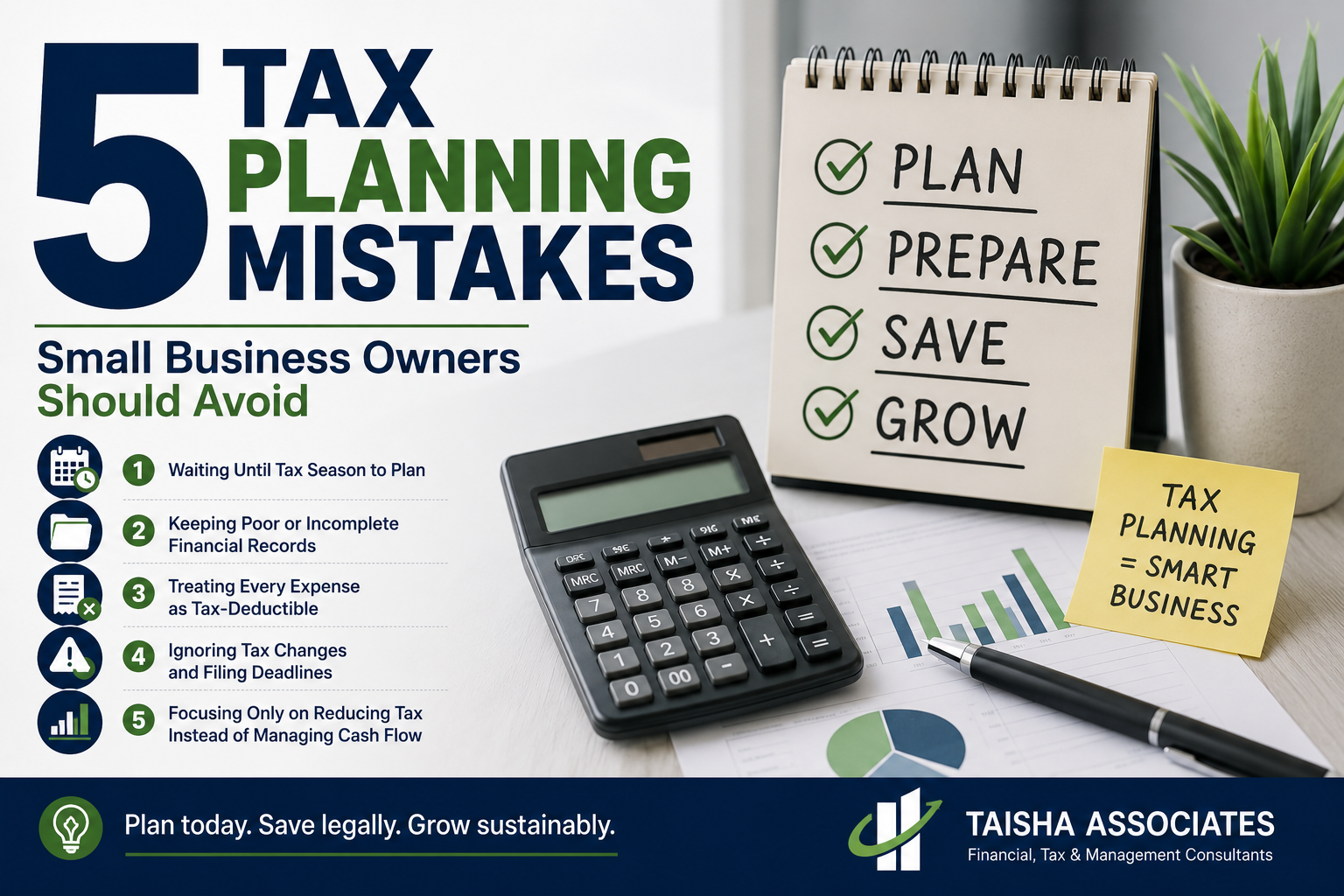
5 Tax Planning Mistakes Small Business Owners Should Avoid
Tax planning is not just something to think about when a tax deadline is approaching. For small business owners, good tax planning should be part of the financial management of the business throughout the year.
Unfortunately, many business owners wait until the end of the year before looking at their tax position. By then, opportunities to reduce tax legally, improve cash flow, and correct record-keeping problems may already have been lost.
Here are five common tax planning mistakes small business owners make and what you can do instead.
- Waiting Until Tax Season to Start Planning
One of the biggest tax planning mistakes is waiting until taxes are due before reviewing the business’s financial position.
When you wait until the last minute, you may discover that your records are incomplete, expenses are missing, or tax liabilities are much higher than expected.
For example, imagine a small consulting business that makes ₦40 million during the year. The owner does not review the company’s financial records until the end of the year. At that point, the accountant discovers that several legitimate business expenses were never properly recorded or supported with appropriate documentation.
The result could be an unnecessarily high taxable profit and a tax bill that puts pressure on the company’s cash flow.
What to do instead: Review your income, expenses, cash flow, and tax position regularly, preferably every month or quarter. Early planning gives you time to make informed decisions.
- Keeping Poor or Incomplete Financial Records
You cannot make good tax decisions if you do not know what is happening financially in your business.
Some small business owners rely on bank statements, WhatsApp messages, notebooks, or memory to track transactions. Others mix personal and business expenses in the same account.
This creates problems when calculating taxable income and determining which expenses are properly attributable to the business.
For example, a business owner spends ₦500,000 during the year on business-related transportation but keeps no receipts or proper records. At tax time, it may be difficult to substantiate the expenses.
What to do instead: Maintain accurate bookkeeping records throughout the year. Keep invoices, receipts, payroll records, bank statements, and other relevant supporting documents properly organized.
Good bookkeeping for small businesses is not simply about preparing accounts. It provides the information you need for effective tax planning and better business decisions.
- Treating Every Expense as Tax-Deductible
Another common mistake is assuming that every expense paid by the business automatically reduces taxable profit.
That is not necessarily the case.
Tax rules generally distinguish between legitimate business expenses and personal or non-allowable expenses. The fact that money left the business bank account does not automatically mean it should be deducted for tax purposes.
For example, suppose a business owner uses the company account to pay ₦300,000 for a personal family expense. Recording it as a business expense simply because the company paid for it can create accounting and tax problems.
What to do instead: Make sure expenses are properly classified and supported by appropriate documentation. If you are unsure whether a particular expense has tax implications, seek professional advice before treating it as a deductible expense.
- Ignoring Tax Changes and Filing Deadlines
Tax laws and regulations can change. Unfortunately, some business owners continue using the same tax approach year after year without checking whether the rules have changed.
This can result in incorrect calculations, missed deadlines, penalties, or missed opportunities for proper tax planning.
For example, a business owner may assume that the tax treatment of a particular transaction has remained unchanged when new legislation or administrative guidance has introduced different requirements.
What to do instead: Keep up with relevant Nigerian tax developments and review how changes may affect your business. Maintain a tax calendar showing important filing and payment deadlines.
Professional tax consulting for small businesses can also help you understand how applicable tax rules affect your particular circumstances.
- Focusing Only on Reducing Tax Instead of Managing Cash Flow
Tax planning should not mean simply trying to pay the lowest possible tax.
The real objective is to manage your tax obligations legally and efficiently while protecting the financial health of the business.
For example, an owner might make an unnecessary purchase simply because they believe spending money will reduce their tax bill. But spending ₦1 million just to save a portion of that amount in tax does not necessarily make financial sense.
The business could have been better off retaining the cash or investing it in something that generates a genuine business benefit.
What to do instead: Consider tax alongside profitability, cash flow, investment decisions, and business growth. Before making a major financial decision, ask both: What are the tax implications? And does this make good business sense?
Better Tax Planning Starts Before the Deadline
Effective tax planning for small business owners is about being prepared, keeping accurate records, and making informed decisions throughout the year.
Avoid these five common mistakes:
- Waiting until tax season to plan
- Keeping poor financial records
- Treating every expense as tax-deductible
- Ignoring tax changes and deadlines
- Focusing only on reducing tax instead of managing cash flow
You do not have to manage everything alone.
At Taisha Associates, we help small and medium-sized businesses improve their bookkeeping, understand their numbers, and manage their tax obligations more effectively.
If you are unsure whether your business is properly prepared for its tax obligations, schedule a consultation with us today. We can review your records, identify potential problem areas, and help you develop a practical tax planning approach for your business.
Taisha Associates | Financial, Tax & Management Consultants
Helping SMEs keep better records, stay compliant, and make better financial decisions.