
Payroll Tax Compliance in Nigeria: PAYE and Withholding Tax Guide for SMEs
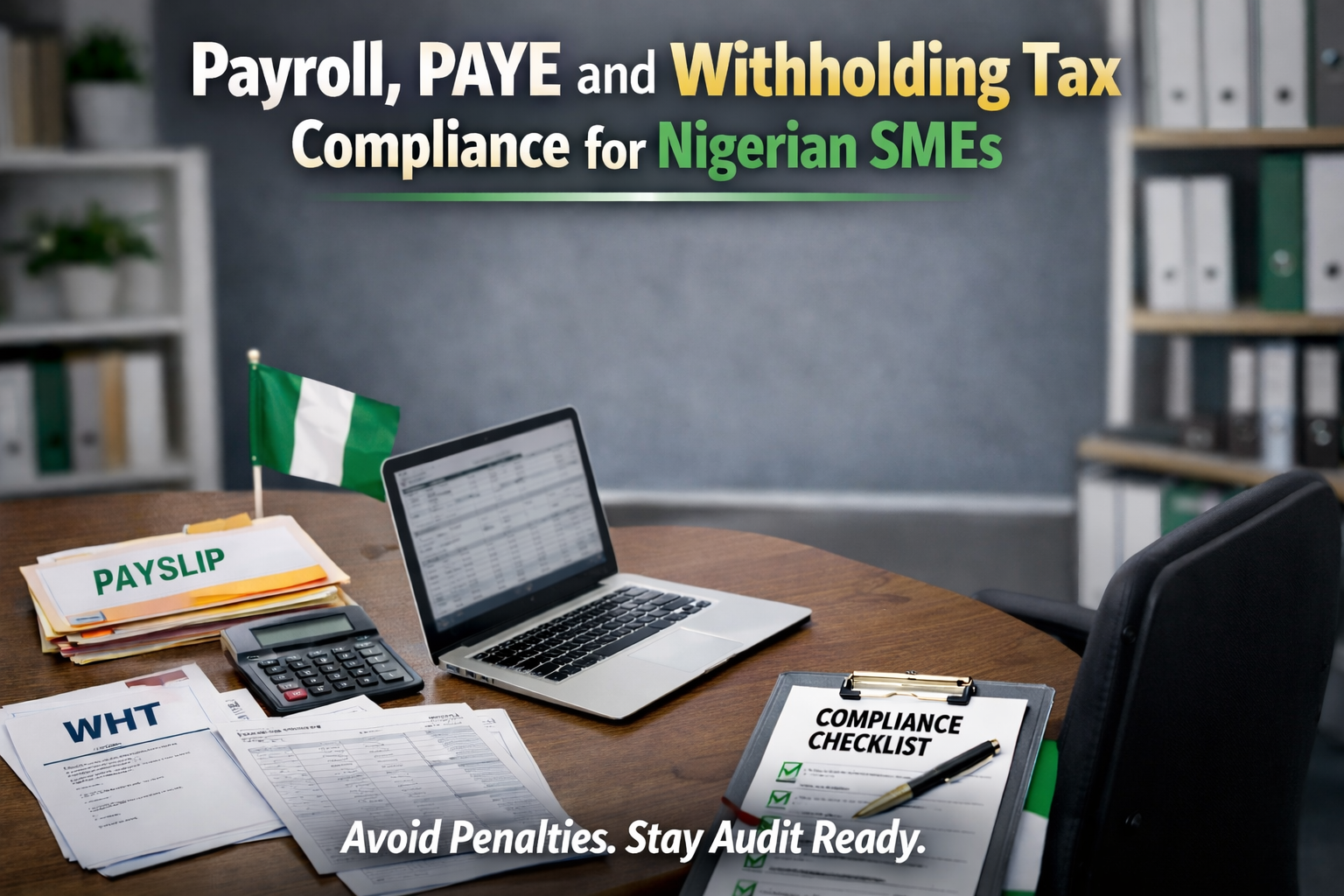
Payroll tax compliance in Nigeria is evolving rapidly. With increased enforcement by tax authorities and tighter reporting standards, many small and medium-sized enterprises are unknowingly exposed to penalties due to PAYE remittance delays, weak payroll documentation, and incorrect withholding tax deductions.
If you run a business in Nigeria and pay salaries, freelancers, vendors, consultants, or contractors, understanding PAYE and withholding tax obligations is no longer optional. It is a core compliance responsibility that directly affects your financial stability and reputation.
This guide explains what Nigerian SMEs must know under the current tax environment and how to stay compliant without unnecessary stress.
What PAYE Means and Why Compliance Is Becoming Stricter
PAYE stands for Pay As You Earn. It is a system where employers deduct personal income tax from employees’ salaries and remit it to the relevant State Internal Revenue Service.
Under the Personal Income Tax framework administered by the Federal Inland Revenue Service and State Internal Revenue Services, employers act as tax agents. This means your business is legally responsible for deducting and remitting employees’ taxes correctly and on time.
Tax authorities are now cross-checking payroll records, bank transactions, pension filings, and tax remittances. Where inconsistencies exist, assessments and penalties follow. Compliance is no longer based on trust alone. It is data-driven and increasingly automated.
Standardised PAYE Remittance and Payroll Documentation Requirements
To remain compliant, SMEs must ensure the following:
Accurate payroll computation
Each employee’s gross salary, allowances, pension deductions, NHF contributions where applicable, and taxable income must be properly calculated.
Correct PAYE deduction
PAYE must be computed using the approved tax rates and reliefs under the Personal Income Tax Act.
Monthly remittance
PAYE deducted must be remitted to the appropriate State Internal Revenue Service on or before the statutory deadline, typically the 10th day of the following month.
Proper documentation
You must maintain payroll schedules, payslips, tax deduction cards, evidence of remittance, and annual returns documentation. Inadequate documentation is one of the biggest risks SMEs face during tax audits.
Without proper records, even when you have paid the tax, you may struggle to defend your position during an audit.
Common PAYE Mistakes Nigerian SMEs Make
Many SMEs make avoidable errors such as:
- Failing to register employees properly for tax purposes
- Using outdated tax rates
- Not remitting PAYE monthly
- Mixing payroll payments with owner withdrawals
- Not issuing payslips
- Poor record keeping
- Underreporting staff strength
Another common issue is classifying full-time staff as consultants to avoid PAYE. Tax authorities are increasingly scrutinising such arrangements and reclassifying them, resulting in back taxes and penalties. The cost of non-compliance often far outweighs the expense of establishing a proper payroll system.
What Is Withholding Tax and When Must You Deduct It
Withholding Tax, commonly referred to as WHT, is an advance tax deduction made when a business pays for certain services or contracts.
Unlike PAYE, which applies to employees, WHT applies to payments made to vendors, contractors, consultants, and service providers.
For example, if your business pays a marketing consultant, legal adviser, contractor, or supplier for qualifying services, you may be required to deduct WHT at the applicable rate and remit it to the tax authority.
Failure to deduct and remit WHT makes your business liable for the tax, plus penalties and interest.
WHT Obligations, Exemptions and Areas of Confusion
Some of the common areas of confusion include:
When WHT applies to professional services
Whether WHT should be deducted from freelancers
How WHT applies to companies versus individuals
When exemptions are valid
How to issue WHT credit notes
Many SMEs either fail to deduct WHT when required or deduct it incorrectly. Both scenarios create compliance exposure.
If your bookkeeping system does not clearly track vendor payments and WHT deductions, errors are almost guaranteed.
How to Create a Simple Payroll and WHT System That Keeps You Audit Ready
An effective payroll and WHT compliance structure should include:
- Clear staff classification
- Separate payroll schedule from other expenses
- Automated tax computation templates
- Monthly PAYE reconciliation
- Vendor payment review checklist
- WHT deduction tracking schedule
- Timely remittance and proper filing
- Secure storage of all evidence of payment
Your payroll records, bank transfers, tax receipts, and accounting records must align. When they do not align, audits become stressful and expensive.
For tech startups, e-commerce businesses, private clinics, schools, agribusinesses, real estate firms, law firms, engineering firms, and consulting businesses, payroll compliance is particularly critical because these sectors are under increasing regulatory scrutiny.
Why Nigerian SMEs Must Act Now
Tax authorities are increasing enforcement activities. Digital tracking systems make it easier to identify noncompliant businesses. Without proper bookkeeping, payroll records, and remittance evidence, SMEs risk:
- Back tax assessments
- Penalties and interest
- Frozen bank accounts
- Reputational damage
- Disqualification from contracts and funding
The solution is not panic. It is structured.
Setting up a clean payroll system, a proper PAYE compliance framework, and an accurate WHT documentation process protects your business and improves financial transparency.
If your business needs help designing a compliant payroll structure, setting up PAYE processes, or managing WHT documentation and monthly remittances, Taisha Associates provides professional support tailored to Nigerian SMEs.
Proactive compliance is far cheaper than reactive penalties.
Leave a Reply